How does Elf on the Shelf work? One December morning, your kids come down for breakfast and find a little elf peeking out of a coffee mug. That night, after they’ve gone to bed, you move it somewhere new. The fun is seeing how long it takes them to spot it the next morning.
If this is your first year, you might wonder when the elf should arrive, whether the kids can touch it, and how often you’ll need to move it. Here’s how the original tradition works and how to make it fit your family, even on nights when you’d rather just go to bed.
How the Christmas Elf Tradition Started
Before The Elf on the Shelf became a book, there was Fisbee, the little elf who visited Carol Aebersold’s family in Georgia each Christmas season. Her daughters would wake up wondering where he’d turn up next.
In 2005, Aebersold and her daughter Chanda Bell shared that family ritual in The Elf on the Shelf: A Christmas Tradition. The book gave other families a story to go with their own elf. Some stuck close to the original. Others added their own twist, turning the morning search into a chance to see what kind of trouble the elf had gotten into overnight.
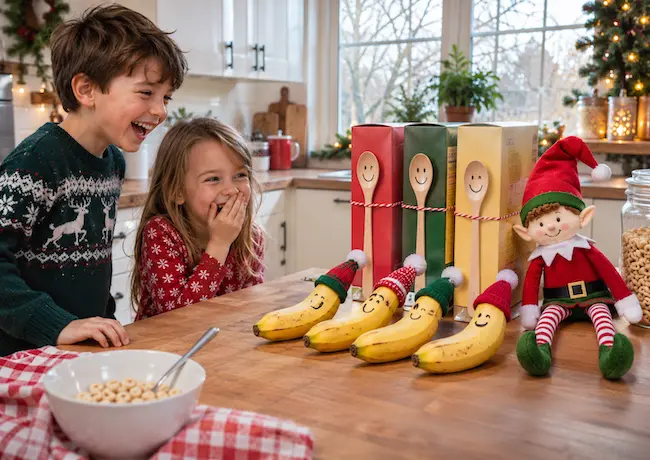
How Does Elf on the Shelf Work at Home?
The original book gives families a starting point. Here are three basics you can adapt at home:
- Name your elf. Let the kids pick a name when it first arrives.
- Decide whether kids can touch it. In the book, touching the elf can make it lose its magic. At home, you can decide whether it’s okay to hold.
- Look for the elf in the morning. It stays still during the day, then turns up in a new spot after bedtime.
Yesterday the elf was on the bookshelf. Today it’s on the kitchen windowsill. That’s enough for a morning search, with no props to find or mess to clean up.
When Does the Elf Arrive and Leave?
Pick an arrival date that fits your December. Thanksgiving weekend and December 1 are both options, but a visit that starts a few days before Christmas can be just as fun. For a December 1 arrival, set the elf out after bedtime on November 30. A short welcome note is enough for that first morning.
In the original story, the elf heads back to the North Pole on Christmas Eve. If you follow that timing, leave a goodbye note for your kids to find on December 24, then put the elf away after bedtime.
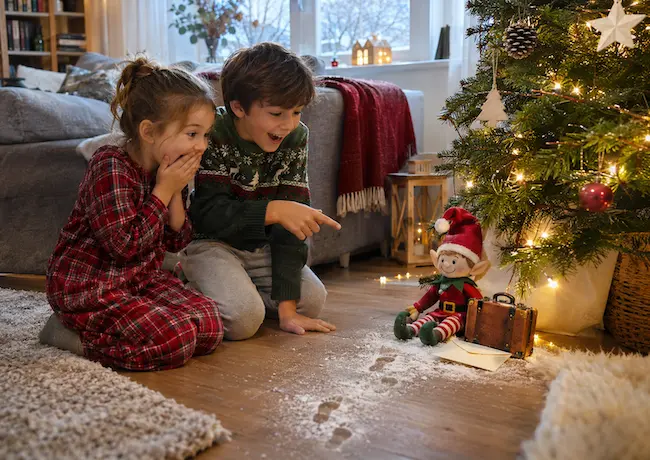
Does the Elf Have to Report to Santa?
Only if you want it to. In the original story, the elf reports back to Santa each night. At home, your elf can simply be a guest who likes to play jokes.
As an early childhood educator, I’d keep the elf’s visit separate from behavior and presents. A young child who takes the story literally may spend more time worrying about what the elf saw than laughing at the joke.
You could say, “Our elf is taking a break from Santa’s workshop. He’s spending December with us, and he loves a good joke.”
What Age Should You Start the Elf Tradition?
Around age 4 is a reasonable time to try it if your child enjoys pretend play. For a toddler who might find it unsettling to hear that a toy moves around at night, keep it simple: pose the elf together during the day and let your child pick where it sits.
Preschoolers who enjoy the surprise might laugh at an elf tucked into a tissue box like a bed. Older kids who know how it works can help set up a scene for a younger sibling if they’re excited to join in.
Does the Elf Have to Move Every Night?
Not at all. Pick two or three mornings a week when your family has time to enjoy the surprise. Here are a few ways to make that schedule easy to keep:
- Save bigger scenes for the weekend. You’ll have more time to put them together and watch the kids’ reactions.
- Keep one quick idea in reserve. Sit the elf beside an open picture book so it looks like it stayed up reading.
- Give the elf a night off. Leave it where it is. It can be back to its antics in a day or two.
I created Crumbs’s printable elf prank kit for evenings when you want to set up a surprise without having to think one up. Pick a scene that fits the time you have, or use one of Crumbs’s Day-Off Notes on an especially busy night.

Help Santa’s Elves in a Christmas Escape Room
In Santa’s List, the head elf takes a tumble on Christmas Eve and forgets where he put the gift list. Kids work together to follow clues, solve puzzles, and find the list before Santa’s sleigh leaves.
Choose the Christmas escape room ages 6-7 for younger players or the Christmas escape room ages 8-12 for kids ready for trickier puzzles.
Count Down to Christmas With Daily Puzzles
A puzzle Advent calendar offers a different kind of Christmas countdown. Kids solve one puzzle a day, and each answer moves the story forward.
In Elf Recruitment, kids take on 24 challenges to earn a spot on Santa’s elf team. You can make it part of breakfast or save it for after dinner, when there’s time to figure out the day’s puzzle together. Explore our printable Advent calendars with puzzles to find a story your family would enjoy following through December.
Make the Elf Tradition Your Own
For your first elf visit, pick an arrival morning when nobody has to rush out the door. Start with one surprise and see what makes your kids laugh before planning the rest of December. The scene they talk about all day might be the one that took you thirty seconds to set up.
For more ways to play together over the holidays, explore our printable Christmas games, including treasure hunts, mysteries, and escape rooms.